Summary & Key Points
"The COMBINE-PMC project aims to evaluate a strategy for the community-based distribution of sulfadoxine-pyrimethamine (SP) by community health workers as part of a sustainable malaria chemoprevention program for children under two years of age."
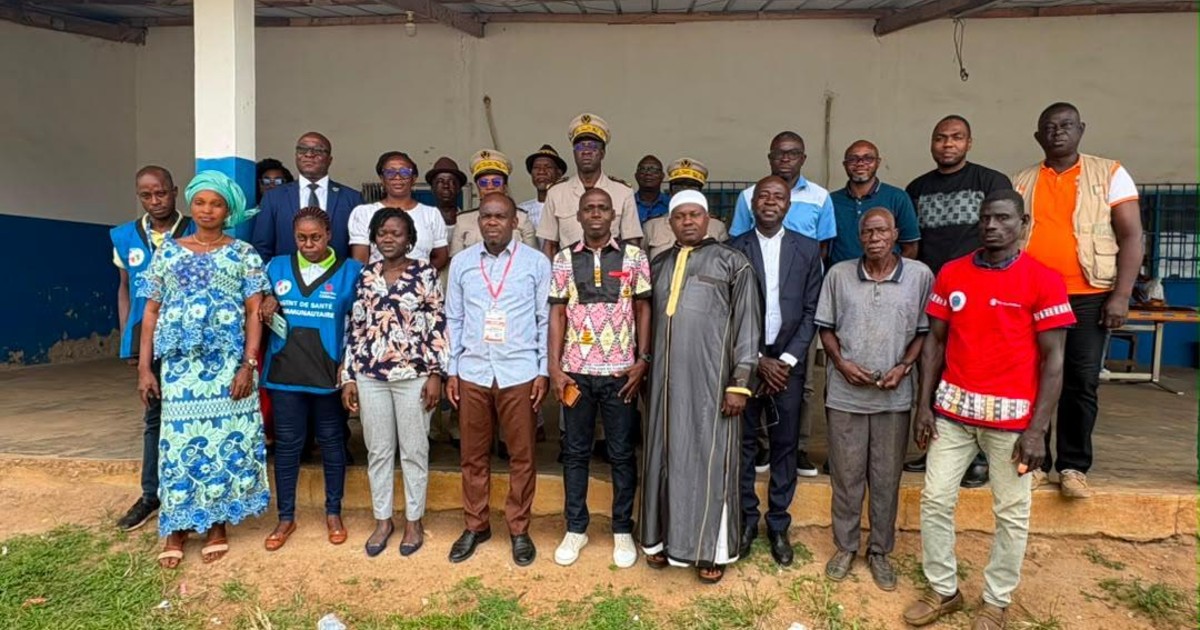
As part of the implementation of the COMBINE-PMC project, the first Community Advisory Council (CAC) was held in Bouaflé, with the participation of institutional, health, community, and religious stakeholders.
The COMBINE-PMC project aims to evaluate a strategy for the community-based distribution of sulfadoxine-pyrimethamine (SP) by community health workers as part of a sustainable malaria chemoprevention program for children under two years of age. This approach aims, in particular, to improve access to malaria prevention and adherence to preventive interventions within communities.
This initiative is led by a consortium comprising the National Malaria Control Programs of Côte d’Ivoire and Togo, the PAC-CI Program, CARESP in Togo, the French National Research Institute for Sustainable Development (IRD), and the University of Bordeaux.
Putting Communities at the Heart of the Strategy
The establishment of the Community Advisory Council follows a co-design workshop held in May 2026. It responds to the desire to develop a community mobilization strategy tailored to local realities and sensitive to gender issues.
The CCC’s mission is, in particular, to contribute to the definition, organization, implementation, and monitoring of community mobilization activities related to the project.
The work focused on several key issues: understanding the community-based chemoprevention strategy and how it relates to the Expanded Program on Immunization; identifying barriers to its adoption; and analyzing social and gender norms that may influence children’s access to health services.
A Participatory Approach
The workshop was based on a participatory approach combining presentations, plenary discussions, and group work. In particular, participants discussed mechanisms for raising awareness and mobilizing the community, the involvement of men in decisions regarding children’s health, and the empowerment of women.
The discussions also helped identify the stakeholders, tools, and communication channels that could effectively support community mobilization efforts.
The Council brought together representatives from the prefectural administration, religious leaders, the health district, the regional health directorate, community leaders, women’s groups, community health workers, as well as representatives from the PNLP and PAC-CI. The workshop was held on July 27 and 28, 2026, at the Bouaflé Prefecture.
Toward a Community Mobilization Plan
At the conclusion of this process, the guidelines defined will serve as the basis for the project’s initial community awareness and mobilization activities. A second CCC workshop is also planned to draw lessons from the initial activities implemented and, if necessary, to adapt the messages and approaches selected.
Through this approach, COMBINE-PMC places communities at the center of its thinking and action, with the goal of fostering greater ownership of malaria prevention interventions among young children, while taking into account the social realities and gender dynamics within households.
Christian KOUADIO
Clinical Research Associate and Communications Manager at PAC-CI
Contact the author