Summary & Key Points
"Since malaria, HIV infection, and tuberculosis are major public health problems, they are among the diseases that the State of Côte d’Ivoire, through the Ministry of Health, Public Hygiene, and Medical Coverage, is working to combat."
Since malaria, HIV infection, and tuberculosis are major public health problems,they are among the diseases that the Government of Côte d’Ivoire, through the Ministry of Health, Public Hygiene, and Universal Health Coverage (MSHPCMU), has been actively combating for decades. However, despite the stated commitment to eradicating them, challenges remain, including access to care, especially in rural areas.
To effectively combat these three diseases, the PAC-CI Program, through the PROXISANTE project, has developed and implemented strategies aimed at improving the integration of HIV, malaria, and tuberculosis prevention and care into the community-level health system through Community Health Workers (ASC). This project was implemented in three localities in the Toumodi Health District (Kpouébo, Djékanou, and Kokumbo) from 2021 to 2023, through a collaboration between the PAC-CI Program and the Directorate of Community Health (DSC), with financial support from Expertise France’s 5% Initiative.
Thus, to be closer to infected and affected populations in rural areas, PROXISANTE delegated tasks to 24 Community Health Workers (CHWs) who were recruited from the Toumodi Health District’s pool and trained to provide home-based care in 1,200 households, under the supervision of nurses from the health zones to which they belong, the NGO EPE, and the District.
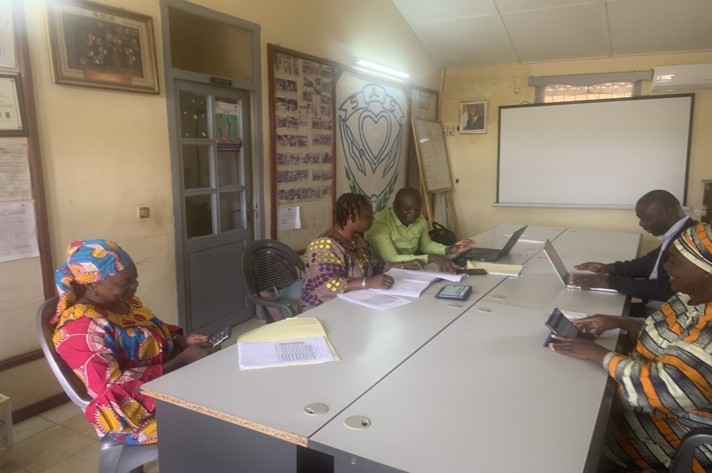
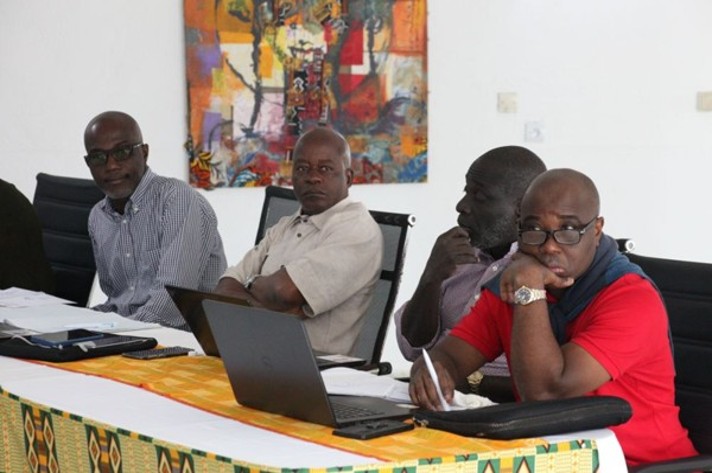
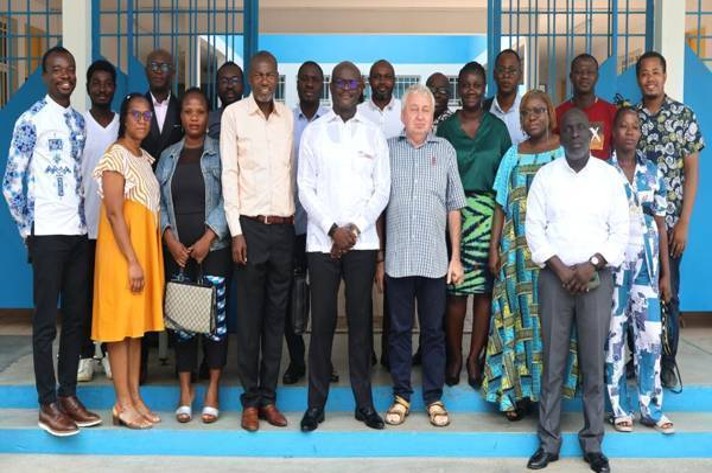
To share the final results of this study, the PAC-CI Program invited, on December 2, 2024, at the Thérèse N’DRI-YOMAN Hall, the various stakeholders to take part in a debriefing meeting to assess the project, identify its strengths and weaknesses, and make practical recommendations for scaling up the initiative.
Present at this meeting were PAC-CI Program leaders (Dr. Raoul Moh, Executive Director, and Dr. Patrick Coffie, Scientific Director), project managers, Dr. Maika Bangali, PROXISANTE project manager, etc., as well as stakeholders (Dr. Françoise Kadja, Director of Community Health and Health Promotion (DSCPS); the representative of the Toumodi Health District; the representative of the National Tuberculosis Control Program; Ms. Liliane Kouassi, representative of the NGO EPE, the representative of the 24 Community Health Workers (CHWs), and a project beneficiary).
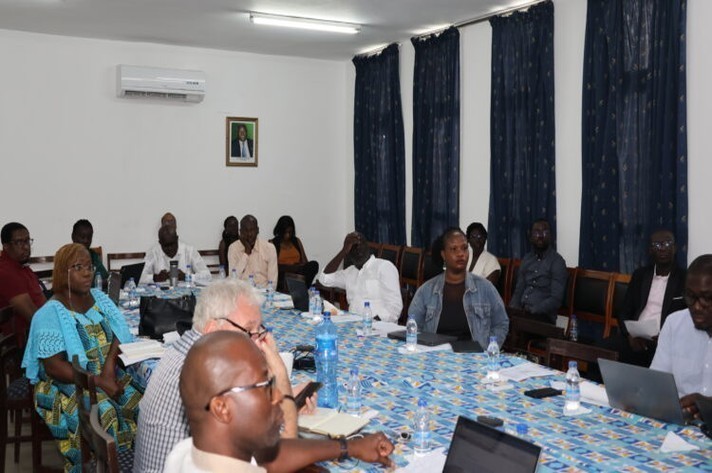
Following the opening remarks by Dr. R. Moh and Dr. F. Kadja, Dr. Philipe Msellati, project manager for the PAC-CI Program, began by outlining the study protocol, emphasizing the objectives to which PAC-CI is committed: To identify cases of uncomplicated malaria among the target populations and to treat and refer cases of non-malarial fever or severe malaria to health centers for management; To identify suspected cases of tuberculosis and refer them to health centers for diagnosis and management of confirmed tuberculosis cases; Identify people living with HIV, integrate them into care, and strengthen treatment adherence; and Contribute to reducing maternal, infant, and child mortality in the three localities.
Following this, the representative of the Toumodi Health District presented the project’s key programmatic results, highlighting the PROXISANTE project’s contribution to achieving the Health District’s objectives. This was made possible, initially, by assessing the acceptability of the project among 1,200 households spread across Kpouébo, Djekanou, and Kokumbo.
On this subject, sociologist Joël Djaha, a researcher with the PAC-CI Program, highlighted the activities of the Community Health Workers (CHWs), particularly the organization and facilitation of group discussions. This socio-anthropological approach not only helped explain the project’s rationale to the beneficiaries but also reinforced awareness-raising messages, identified the target groups’ social perceptions regarding the various topics addressed in the study, and encouraged their participation. The ASC representative will confirm the essential role played by his peers, the relevance of the project’s implementation methodology, and its impact on the beneficiaries.
As for the coordinator of the NGO Espoir Pour Enfant (EPE), she shared with the audience the role her organization played in this study. This primarily involved ensuring effective monitoring of project activities across all localities. This work was made possible through close collaboration with the district’s health and prefectural authorities.
Finally, Dr. Bangali presented the actual final results of the study. She began by showing that these results are in line with the targets set at the start of the project. She emphasized that PROXISANTE has had a positive impact on certain health indicators in the district, such as the mortality rate from severe malaria, patient retention on antiretroviral (ARV) therapy twelve months after treatment initiation, and the number of people aware of their HIV status.
However, a few weaknesses were identified. These include the need to constantly adapt the initial strategy to on-the-ground realities in order to ensure the smooth implementation of activities, the achievement of set targets, and the identification of suspected tuberculosis cases. This second weakness may be linked to an insufficient understanding of the signs to look for and to methodological choices regarding the study population.
Finally, the Director of the DSCPS outlined the next steps to be taken to ensure the sustainability of the achievements of this important project. In the coming days, the project’s results will be presented to the office of the Minister of Health, Public Hygiene, and Universal Health Coverage so that the minister can review them and propose a course of action.
PAC-CI
Associate researcher at PAC-CI, contributing to the advancement of scientific research and public health in Côte d'Ivoire.
Contact the author