Summary & Key Points
"It is within the framework of the "PROXISANTE project: Community Health Workers (CHW). Strengthening a proximity strategy in rural areas" that a delegation from the PAC-CI Program, led by its Executive Director, Dr. Moh..."
As part of the PROXISANTE project: Community Health Agents (CHA). Strengthening a proximity strategy in rural areas, a delegation from the PAC-CI Program, led by its Executive Director, Dr. Moh, stayed in the Lacs District from February 26 to 28, 2024. This delegation met with administrative authorities, the departmental director, community leaders from the localities of Toumodi, Djékanou, Kpouebo, and Kokoumbo, and the CHAs.
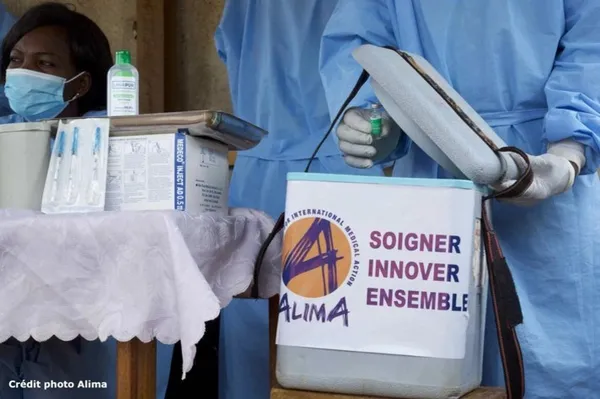
The main objective of the PROXISANTE project is to develop and implement strategies to improve the integration of HIV, malaria, and tuberculosis prevention and care into the community health system through Community Health Agents.
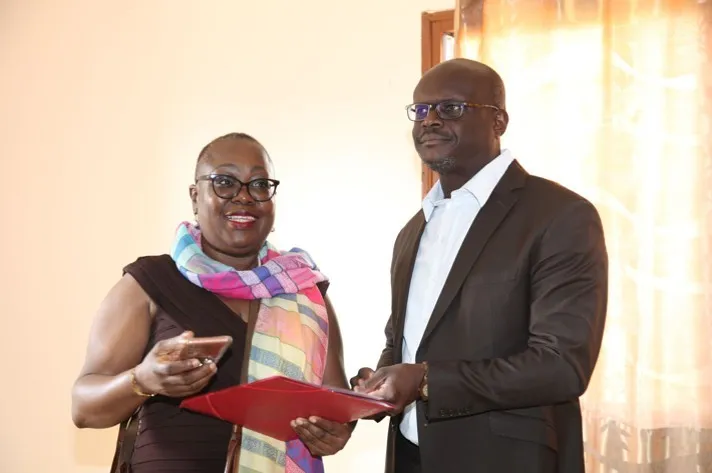
Before the meeting, the team, also composed of Dr. Bangali, the project leader, and Dr. Msellati, visited the administrative authorities of Toumodi, Djékanou, and Kpouebo, localities where the project took place. These visits aimed primarily to present their respects to the prefectural body and outline the terms of reference for the feedback meeting.
During this meeting, the exchanges between the various participants focused on presenting the results of the activities, assessing the achievement of the study's objectives, and highlighting the strengths and challenges of implementation for future national scaling up.

Group photo of the prefectural body, the PAC-CI Program delegation, the CHAs, and members of the EPE NGO
In addition to the activity results presented by the Lacs District, the CHAs, and the coordinator of the EPE NGO, the project beneficiaries also shared testimonies of the positive impacts on their daily lives. Overall, this project has been very well received by the populations of these localities; this has facilitated home care by the CHAs. Indeed, they have been able not only to provide HIV counseling and testing but also to treat many cases of malaria in children early thanks to the PROXISANTE project, thus preventing severe malaria. However, there is still work to be done in the fight against tuberculosis in these localities, as noted by Dr. Bangali.
Speaking at the end of the meeting, the regional prefect expressed his satisfaction with the results presented. He encouraged the departmental director of health to use the CHAs, given the skills they have acquired in the field.
Far from ending with these satisfactory results, the next steps of this project will focus on valuing the results of said project and feedback to the national party and partners.
Finally, it should be noted that health needs in Côte d'Ivoire, particularly in decentralized areas, are significant, but healthcare services are still insufficient. This is why, for Dr. Bangali, this type of action is an opportunity for the PAC-CI Program, in collaboration with the Ministry of Health, Public Hygiene, and Universal Health Coverage (MSHPCMU), to operationalize the results of studies conducted by the Program and to develop other studies on other themes in these areas.