Summary & Key Points
"On October 11, 2024, the Thérèse N’dri-Yoman Room at the PAC-CI Research Center hosted the workshop to launch Phase 1 of the SIMBADE clinical trial, whose primary objective is to simplify the care and follow-up of people"
On October 11, 2024, the Thérèse N’dri-Yoman Room at the PAC-CI Research Center hosted the launch workshop for Phase 1 of the SIMBADE clinical trial, whose primary objective is to simplify the care and follow-up of people living with the hepatitis B virus in other regions of Côte d’Ivoire (outside the Greater Abidjan area).
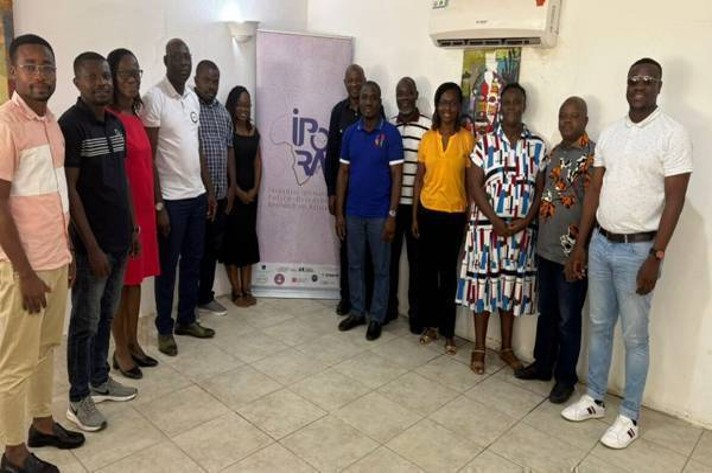
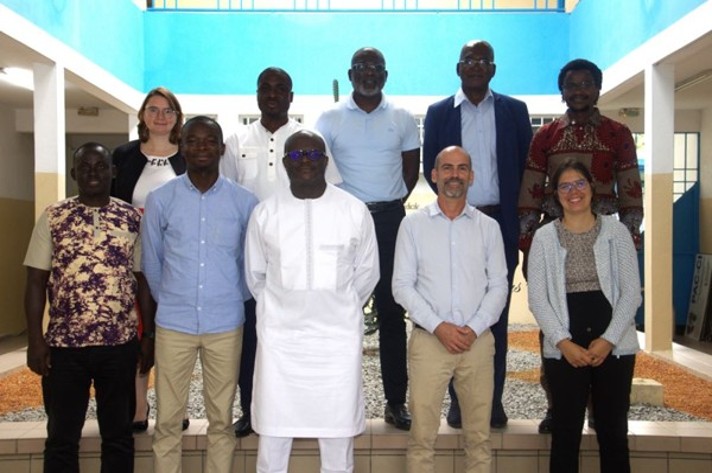
The meeting was attended by Prof. Emile Allah-Kouadio, Director and Coordinator of the National Program to Combat Viral Hepatitis (PNLHV) in Côte d’Ivoire; Dr. Raoul Moh, Executive Director of the PAC-CI Program, Dr. Anani Badjé, Director of Operations for the PAC-CI Program, Mr. Yoman Yao Boniface, President of the NGO “SOS Hépatites Côte d’Ivoire,” and researchers from the University of Bordeaux (led by Dr. Antoine Jaquet, the project’s principal investigator), the ANRS-MIE (France), Cheick Anta Diop University (Senegal), and PAC-CI. The project designers aimed to present this phase of the project—the “feasibility and acceptability study in Côte d’Ivoire”—to the various partners.
After welcoming his guests and reiterating the theme and its relevance in the Ivorian context, Dr. Moh expressed his own gratitude, as well as that of the Executive Board, to Prof. Allah-Kouadio for his personal and professional commitment to the PAC-CI Program’s projects on viral hepatitis.

Prof. Emile Allah-Kouadio, Director-Coordinator of the PNLHV in Côte d’Ivoire
Taking the floor, the Director-Coordinator of the PNLHV, in his presentation on “Achievements and Challenges in the Fight Against Viral Hepatitis in Côte d’Ivoire,” outlined the epidemiological situation of hepatitis (A, B, C, D, and E) in Côte d’Ivoire, with a particular focus on hepatitis B and C. From the outset, he described them as a “deadly epidemic,” a major threat to public health that must mobilize policymakers, health authorities, researchers, the general public, and community leaders and workers.
Indeed, he noted, the prevalence of hepatitis B stands at 9%, and that of hepatitis C at 3.3%. Compared to the prevalence of HIV, which currently stands at 1.82%, the alarming situation regarding hepatitis B has led the WHO to call for a global mobilization to eliminate the disease by 2030. Unfortunately, despite the technical and financial efforts made by the government to facilitate access to treatment for hepatitis B and C, the resources available to enable the PNLHV to be more effective on the ground—in screening, treating, and monitoring patients—remain insufficient.
Yoman Y. Boniface of “SOS Hépatites en Côte d’Ivoire” will address this issue as well, while highlighting the initiatives (awareness campaigns, information, and free screening tests) carried out by his organization, in close collaboration with the PNLHV and with technical support from PAC-CI, to effectively combat viral hepatitis. According to him, given the difficulties encountered in certain areas in screening for HBV carriers (due to the excessive cost of screening tests), vaccinating the population, and ensuring patient care and follow-up, the SIMBADE project represents a real opportunity for patient organizations. This is because the results of this clinical trial could make a major contribution to the debate on the impact of expanded antiviral treatment for hepatitis B virus in the context of the recent revision of WHO criteria for initiating treatment for people living with the hepatitis B virus (PLHBV).

Dr. Maëlle de Seze, Researcher at the University of Bordeaux
Following her presentation, other presentations were given. These included, among others, presentations by Dr. Antoine Jaquet and Dr. Maëlle de Seze (from the University of Bordeaux), who respectively provided an overview of the project and explained the main aspects of Phase 1 (methodology, tools, targets, study sites, and timeline).
Regarding this first phase, it should be noted that the experts will assess the feasibility and acceptability of a simplified strategy for initiating antiviral treatment—with or without a community-based intervention (involving Community Health Workers in the care and follow-up of people living with HBV in a decentralized setting) in Côte d’Ivoire. To achieve this objective, several field visits will be conducted throughout the country, in decentralized areas.
Finally, the participants agreed to meet in February or March 2025 to present the results of Phase 1, with a view to submitting a proposal for Phase 2 of the SIMBADE project.
PAC-CI
Associate researcher at PAC-CI, contributing to the advancement of scientific research and public health in Côte d'Ivoire.
Contact the author