Summary & Key Points
"In the framework of the “PROXISANTE Project: Community Health Workers (CHWs). Strengthening a proximity strategy in rural areas,” a delegation from the PAC-CI Programme led by its Executive Director, Dr Moh…"
As part of the “PROXISANTE Project: Community Health Workers (CHWs). Strengthening a Proximity Strategy in Rural Areas,” a delegation from the PAC-CI Program led by its Executive Director, Dr. Moh, visited the Lakes District from February 26 to 28, 2024. The delegation met with administrative authorities, the district director, community leaders from the localities of Toumodi, Djékanou, Kpouebo, and Kokoumbo, and the CHWs.
The PROXISANTE project’s main objective is to develop and implement strategies to improve the integration of HIV, malaria, and tuberculosis prevention and care into the community-level health system through Community Health Workers.
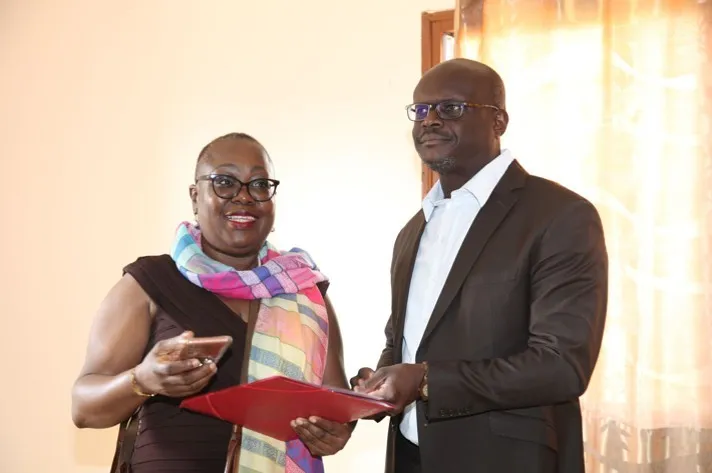
Before the meeting, the team—also including Dr. Bangali, the project lead, and Dr. Msellati—visited the administrative authorities of Toumodi, Djékanou, and Kpouebo, the localities where the project was implemented. The purpose of these visits was primarily to introduce the team to the prefectural staff and outline the terms of reference for the debriefing meeting.
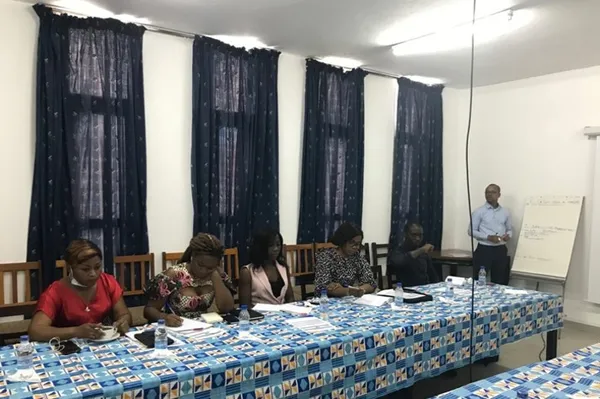
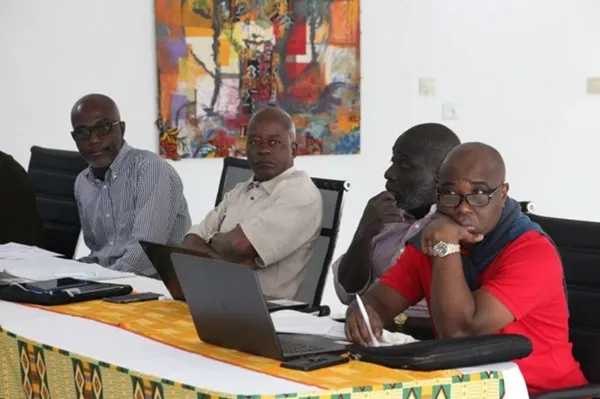
During the meeting, discussions among participants focused on presenting activity results, assessing the study’s objectives, and highlighting strengths and challenges in implementation to inform future national scale-up.

Group photo of the prefectural staff, the PAC-CI Program delegation, the CHWs, and members of the EPE NGO
In addition to the activity results presented by the Lakes District, the CHWs, and the EPE NGO coordinator, project beneficiaries shared testimonials about the positive impact on their daily lives. Overall, the project was well received by local populations, facilitating home-based care by CHWs. Indeed, they not only provided HIV counseling and testing but also enabled early treatment of many childhood malaria cases through the PROXISANTE project, helping to prevent severe malaria. However, as Dr. Bangali noted, more work is still needed in tuberculosis control in these areas.
At the end of the meeting, the Regional Prefect expressed satisfaction with the results presented and encouraged the district health director to utilize CHWs, given the skills they have acquired in the field.
Far from concluding with these satisfactory results, the next steps for this project will focus on promoting the project’s findings and sharing them with national stakeholders and partners.
Finally, it is important to emphasize that health needs in Côte d’Ivoire—particularly in decentralized areas—are significant, yet the supply of care remains insufficient. For Dr. Bangali, initiatives like this one provide an opportunity for the PAC-CI Program, in collaboration with the Ministry of Health, Public Hygiene, and Universal Health Coverage (MSHPCMU), to operationalize study results and develop further research on other topics in these areas.